
Dalton, GA · Garage Door Service
Garage Door Maintenance for Ringgold's Newer Housing Stock
Most Ringgold homes date from the 1990s and 2000s, not the 1980s builds common closer to Dalton. That gap changes what wears out first on your door and opener.
- Repairs & new doors
- Springs & openers
- Serving 6 nearby communities
Time on the Job
We run out from Dalton, about 13 miles up the road, to handle maintenance calls in Ringgold. That drive matters for one reason: it means we're not swinging by on a whim between other jobs in town. When you book a maintenance visit here, we're planning the trip, so it helps to batch what needs looking at rather than calling every time a hinge squeaks.
Ringgold's housing stock skews newer than a lot of what we see elsewhere in the service area. Where the broader Dalton coverage area centers on homes built around 1986, Ringgold's median build year lands closer to 2001. That's a real difference in the hardware on your door. Homes from this era came with steel torsion springs rated for the heavier insulated sections that were becoming standard by then, and openers with early safety-reversal sensors rather than the mechanical-only setups in older housing. The maintenance a 2001 door needs isn't the same as what a 1986 door needs, and we check different things depending on which one we're standing in front of.
Why This Fails Locally
With about 1,415 households in Ringgold and a median income around $45,083, we see a lot of owners who bought into a door system already fifteen to twenty years old and haven't touched it since. The common failure here isn't a worn-out 1960s torsion spring with obsolete hardware - that's a Dalton problem, not a Ringgold one. It's opener logic boards and photo-eye sensors from the early 2000s wearing out of alignment, or nylon rollers original to a 2001-era install finally cracking after two decades of cold-weather cycling.
The service area sits in a cold-moderate climate band, and that means freeze-thaw cycling on steel parts every winter. On a door this age, the grease in the bearings has usually gone stiff and the weatherstrip at the bottom has hardened enough to let drafts through. None of that is dramatic, but it's the kind of wear that turns into a stuck door on the coldest morning of the year if nobody's looked at it.
What Can Go Wrong
On a door built around the 2001 median for this area, the pattern we see most is drift in the opener's force settings - not a dead opener, just one that's started closing too hard or stopping short because the limit switches have crept over years of use. Second most common: the extension or torsion springs losing a measurable amount of tension, which shows up as the door feeling heavier to lift by hand before it ever fails outright.
Cables fraying at the bottom bracket show up more in homes that haven't had a single maintenance visit since they were built - not rare in a market with a median household income around $45,083, where a working door often doesn't get touched until it stops working. We also find weatherstripping that's hardened and cracked from the area's cold-moderate winters, letting in enough air that owners notice a draft before they ever notice the actual wear underneath it.
What Is on the Truck
For a maintenance visit on a door in this age range, we bring torsion spring sets sized for the heavier insulated sections common on 1990s-and-later installs, roller sets in both nylon and steel, and the photo-eye sensors and logic boards that fit openers from that era rather than the older mechanical units. We carry bottom-bracket cable and standard weatherstrip stock in the sizes that match the newer track and door widths typical of Ringgold construction.
One honest limit: if your opener is a less common model or needs a specific circuit board we don't stock, that part can mean a short wait while it's ordered in, rather than a same-visit fix. We'd rather tell you that up front than pretend every board is sitting on the truck.
Doing It Yourself
There's real maintenance an owner can do between visits. Wipe down and lightly lubricate the rollers and hinges twice a year, check that the bottom weatherstrip still seals against the floor with no daylight showing through, and test the auto-reverse safety feature by setting a piece of wood in the door's path and making sure it reverses on contact.
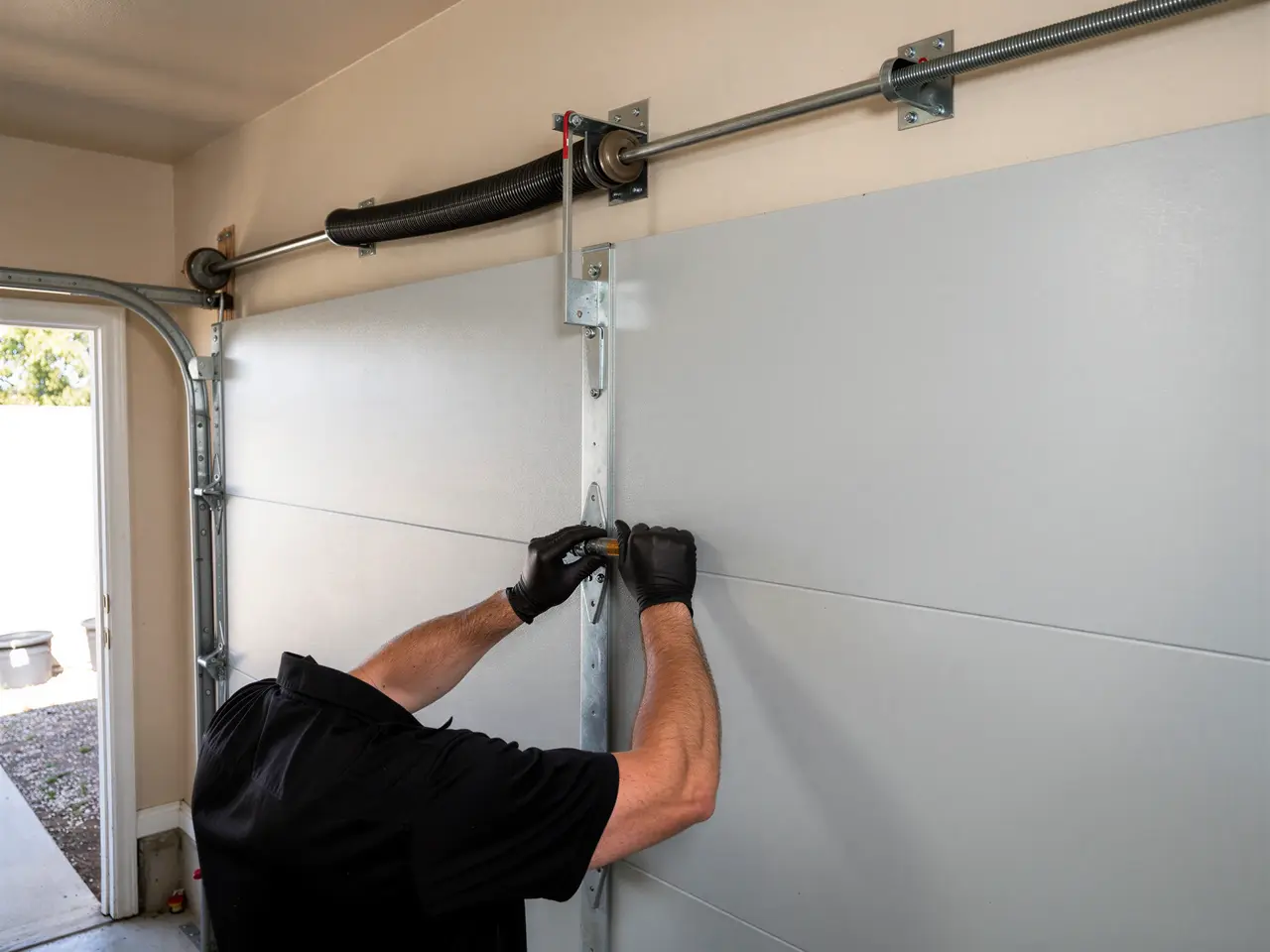
What you shouldn't do yourself: touch the torsion spring. On a door this size, that spring holds enough stored tension to cause a serious injury, and it's not a job for a weekend fix. If the door feels noticeably heavier to lift by hand than it used to, that's the spring losing tension - call it in rather than adjust it yourself.
Frequently asked questions
How often does a door built around 2001 need maintenance in Ringgold?
Once a year is reasonable for a door this age, more often if you notice the opener struggling or the door feeling heavier to lift. Doors from the 1990s-2000s era hold up well structurally but the opener electronics and springs are the parts that drift out of adjustment over two decades of use.
Is my opener too old to service instead of replace?
Most openers from Ringgold's housing era, built mostly from the 1980s through 2001, still use parts we can source and service. We'll tell you honestly if a board or sensor isn't available and replacement makes more sense than chasing parts.
Do you have a local office in Ringgold?
No. We work out of Dalton and drive out to Ringgold, about 13 miles, for maintenance and repair calls. There's no separate branch here, just the same trucks and the same stock making the trip.
Why does cold weather affect my door more some winters than others?
The area sits in a cold-moderate climate band, so steel springs and cables go through repeated freeze-thaw cycling each winter. A door that's overdue for lubrication or has hardened weatherstrip will show stiffness or sticking on the coldest mornings before it shows any problem the rest of the year.
Book garage door service in Dalton
Call now or request a quote - tell us what the door is doing and where you are.