Dalton, GA · Garage Door Service
Garage Door Repair Built Around Dalton's Housing and Winters
Dalton Garage Door Pros explains what drives repair costs, when to call, and how cold-moderate winters wear on the torsion hardware common across Dalton's 1965-2001 housing stock.
- Repairs & new doors
- Springs & openers
- Serving 6 nearby communities
What You Pay
We don't quote a number over the phone, and we're not going to pretend we can. Spring size, drum width, and whether the opener still matches the door all change the job, and on a house built in the 1965-2001 range - which covers most of this service area, median year 1986 - you're often dealing with original hardware that nobody stocks anymore. That means we sometimes have to special-order a part instead of pulling it off the truck, and that changes the timeline more than the price.
What we can tell you is what drives the cost up or down. A single torsion spring swap on a door that's otherwise sound is the cheapest call we make. A full door replacement, because the track is bent past straightening or the panels have rusted through at the bottom, costs more but stops the repeat calls. At a median household income of $65,070 across this area, most of the owners we talk to are weighing exactly that trade-off - fix it again or replace it - and we'll tell you honestly which side of that line your door is on once we've looked at it, not before.
When to Get Help
If the door is thirty-plus years old and it's started making a grinding noise on the way down, that's usually the rollers, not the opener - and on this housing stock, thirty-plus years old is the norm, not the exception. Across the twelve areas we cover, Tunnel Hill, Varnell, Chatsworth, Cohutta, Ringgold, Resaca, Rock Spring, Indian Springs, LaFayette, Calhoun, Fort Oglethorpe, and Chickamauga, the stock is mostly 1980s and 90s construction, so a lot of these doors are running on hardware that's aged out together, all at once, not one part at a time.
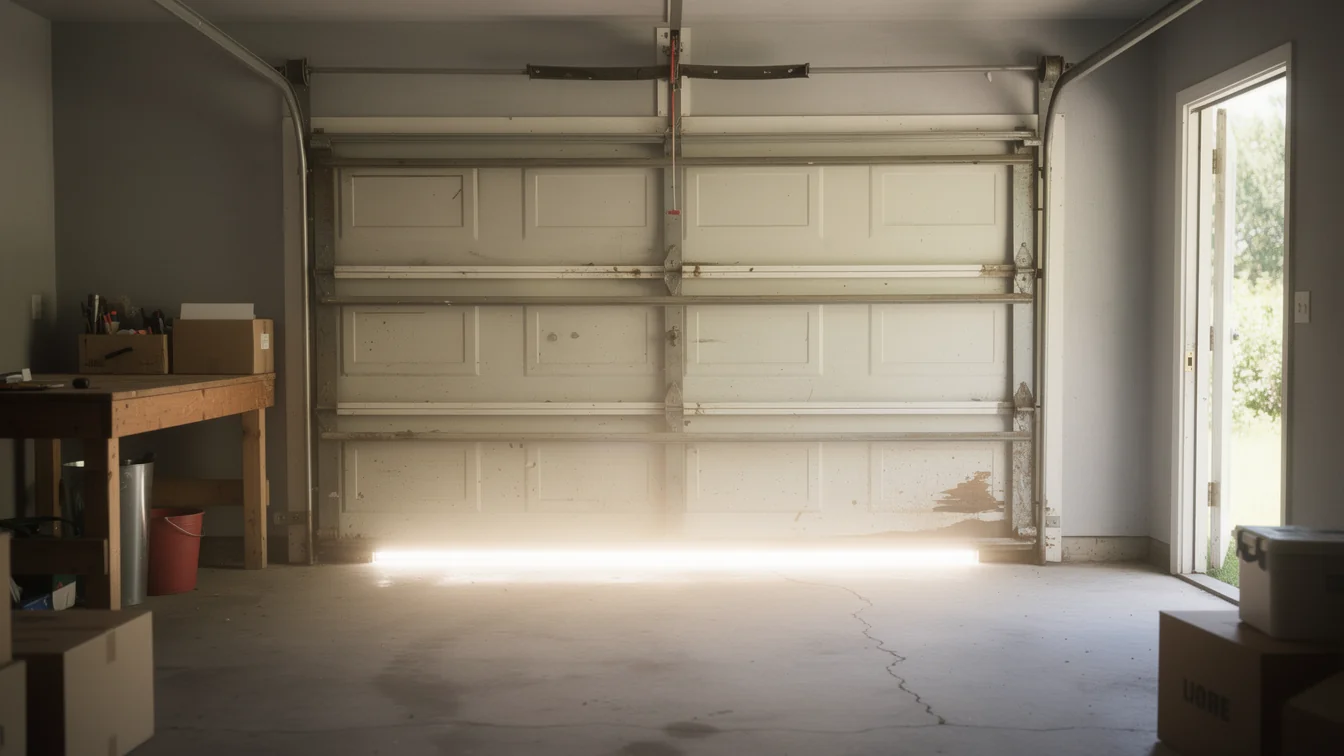
Call before the spring actually breaks if you can. A door that's gotten heavy to lift by hand, or an opener that strains and reverses partway up, is telling you the spring is losing tension. Once it snaps, the door is dangerous to touch and the cable can whip. If the door won't open at all and the opener light is blinking, that's usually a safety sensor or a broken cable, not something to force past with the manual release unless you know what you're doing.
The Problem
The core issue in this area isn't bad installs, it's age catching up all at once. With 9,135 owner-occupied houses out of 21,346 households in this service area, a big share of the doors we get called to are original equipment from the build era, not replacements installed in the last decade. That means when one torsion spring goes, the other one on the same door is usually close behind, because they were wound and loaded on the same day in, say, 1988.
We see this most on double doors from the 1980s stretch of that build window - the ones with a single spring doing more work than it should, or two springs that were never rated right for the door's weight. It's not a defect specific to any one builder; it's just what thirty-five to fifty years does to galvanized steel wound under tension. Replacing one spring and leaving its twin alone is a short-term fix. We'll say so if that's what you're asking for, but we'll also tell you it's likely a second call within the year.
What the Weather Here Does to It
This area sits in a cold-moderate climate band, which means the freeze-thaw cycle runs through the whole winter instead of hitting once and staying put. That matters for a garage door more than people expect. The steel track flexes slightly with temperature, and on hardware that's already decades old from the 1965-2001 build era, that flex works the roller bearings loose a little faster than it would somewhere with a steadier climate.
Weatherstripping is the other piece. Vinyl seals at the bottom of the door and along the sides harden and crack under repeated cold snaps, and once that seal goes, moisture gets into the bottom panel and starts rust from the inside, which you won't see until it's already eaten through the steel. We can't stop the cycle, but swapping the bottom seal before it cracks is cheap insurance against a much bigger repair later. It's one of the few things on this list that's genuinely worth doing on a schedule rather than waiting for a symptom.
Frequently asked questions
Why does my spring keep breaking even after a repair?
On a door this age, both torsion springs were wound at the same time and carry the same wear. Replacing one and leaving the other is a common shortcut, but the second spring is usually close to failing too. If your house falls in the 1965-2001 build range common here, we'll generally recommend doing both at once to avoid a second service call within months.
Is it normal for my door to feel heavier in winter?
Yes, to a degree. Cold stiffens the lubricant in the rollers and tightens the steel track slightly, so an opener that's already working near its limit can start to strain. If it's noticeably harder to lift by hand even in summer, that's the spring losing tension, not the weather, and it's worth a look before it fails outright.
How do I know if it's the opener or the spring?
If the door is hard to lift by hand with the opener disconnected, it's the spring. If it lifts fine by hand but the opener struggles, grinds, or reverses, it's usually the opener or the track alignment. Most of the calls we get on older homes in this area turn out to be spring tension, not the opener itself.
Related garage door services in Dalton
More garage door guides
Book garage door service in Dalton
Call now or request a quote - tell us what the door is doing and where you are.